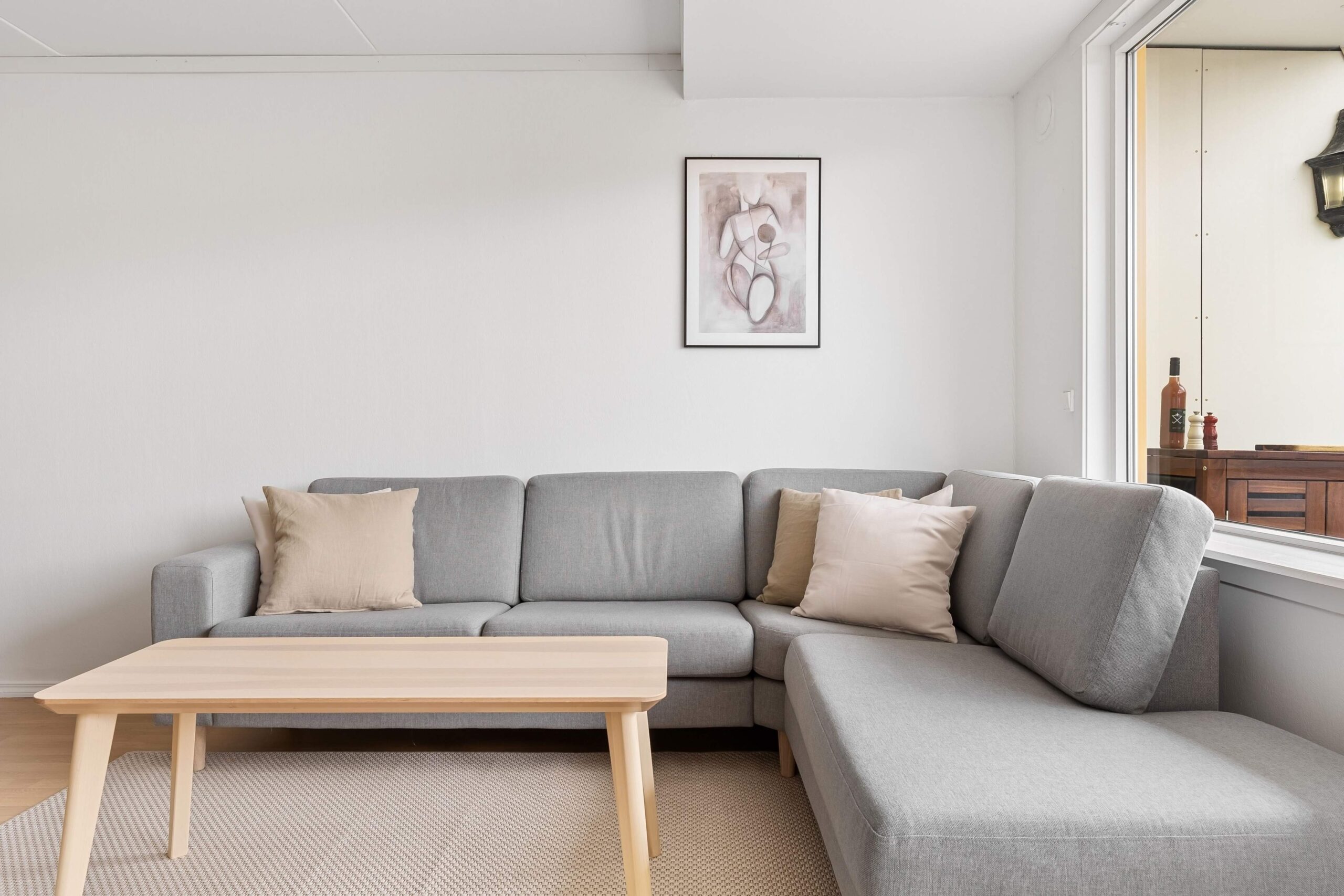
I spent three weekends, one measuring tape argument with my partner, and one very awkward call with a delivery company learning this lesson: a corner couch is the single easiest piece of furniture to get catastrophically wrong. It’s also, when you get it right, the one piece that can make an entire living room feel like it was designed by a professional instead of assembled from a catalog.
If you’re standing in a showroom right now, running your hand along the arm of a sectional and quietly wondering whether it will actually fit through your front door keep reading. This guide walks through everything worth knowing before you commit, in the order it actually matters.
Why the Corner Couch Is Having a Moment
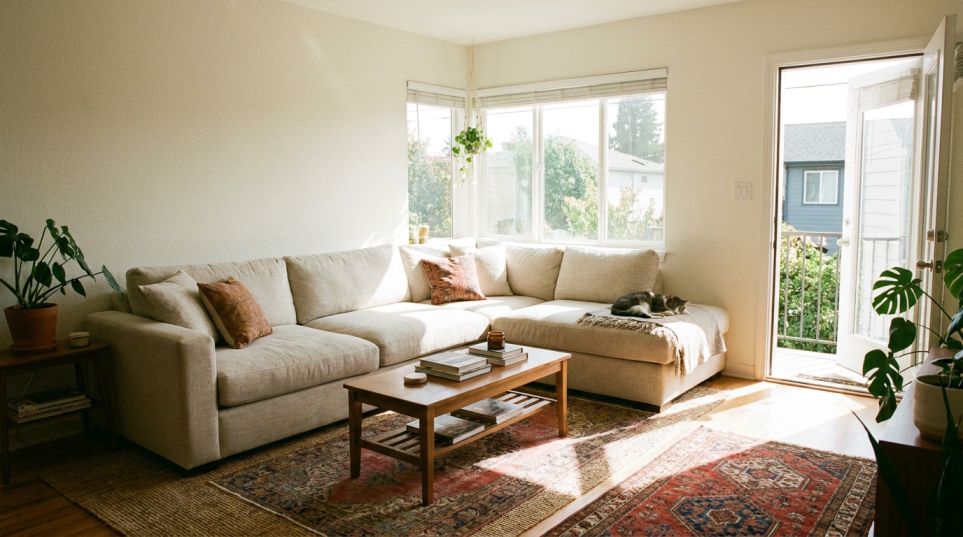
Corner couches also called corner sofas, sectionals, or L-shaped sofas have quietly become the default choice for American living rooms, and it’s not just an aesthetics thing. Furniture retailers now count sectionals among the most purchased living room pieces, largely because they solve two competing problems at once: they deliver serious lounging real estate, and they don’t chop a room into the awkward, disconnected zones that two separate sofas often do.
Designers are also leaning into flexibility. According to Living Spaces designer Brynna Evans, a modular corner couch can even be used to define zones in an open floor plan her advice is to “embrace the zoning capabilities of a modular sofa” to separate a living area from a dining space without adding a wall.
Step 1: Measure Before You Fall in Love
Nearly every regret I hear from readers about their corner couch traces back to skipping this step. A corner couch is the largest single object most people will ever bring into a living room, and its footprint is deceptive in a showroom, where the space around it is enormous and empty.
Before you compare a single fabric swatch, measure your room properly including the two walls that will actually form your L-shape, not just the one wall you’re picturing the couch against.
The Measurements That Actually Matter
| Measurement | Why It Matters | Rule of Thumb |
|---|---|---|
| Overall width & depth | Total floor footprint of the couch | Leave 30–36″ of walking clearance around it |
| Chaise length | Whether you can fully stretch out | Add 4–6″ beyond your height |
| Diagonal (door) depth | Whether the couch can physically enter the room | Compare against your narrowest doorway |
| Ceiling height | Matters for high-back or reclining sectionals | Double-check in older homes with lower ceilings |
Don’t Forget the Journey In
This is the step people skip, and it’s the one that ends with a couch wedged sideways in a stairwell. Measure every doorway, hallway turn, and staircase landing the couch has to pass through not just the final room. If your building has a tight stairwell or a 90 degree landing, look for a couch that ships in smaller, modular pieces, or confirm with the retailer whether the legs and back can be removed for delivery.
Step 2: Pick the Configuration That Matches How You Live
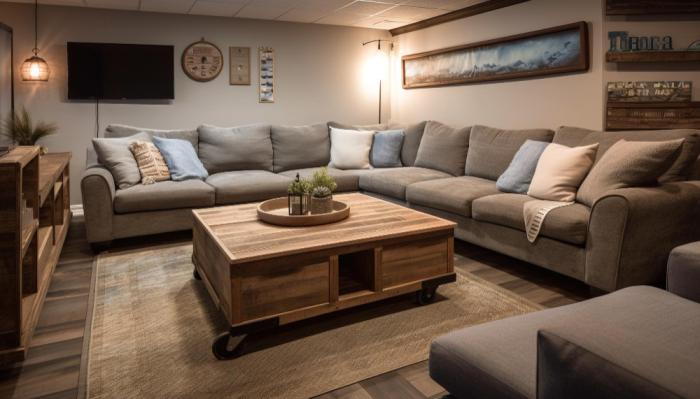
Corner couches generally come in three shapes: the L-shape, the U-shape, and the fully modular sectional. An L-shape is the most space efficient and works in nearly any living room. A U-shape delivers the most seating but needs serious floor space think large family rooms, not city apartments. Modular sectionals are the most flexible of all: because each piece is separate, you can rearrange them season to season or even split the couch into two smaller sofas down the line.
LAF or RAF? Solve This Before You Order
Once you’ve settled on a shape, you’ll run into two intimidating acronyms: LAF (left arm facing) and RAF (right arm facing). They simply describe which side the chaise sits on when you’re standing in front of the couch and facing it and getting it backwards is one of the most common, and most expensive, sectional mistakes.
The fix is simple: stand where you’d normally walk into the room and picture the couch in place. Traffic flow should drive the decision the chaise belongs on the side with the least foot traffic, so it never becomes an obstacle. If your room is built around a TV or fireplace, make sure the main seating faces that focal point, not a blank wall.
Step 3: Look Under the Cushions Before You Look at the Price Tag
My first corner couch, bought straight out of college, looked incredible for about eight months, then started sagging in the middle seat and creaking every time someone sat down. The fabric was fine. The problem was underneath it a stapled softwood frame and cheap foam that had already lost its shape.
This is the part most buyers skip, because it’s hidden under upholstery you can’t inspect in a showroom. Ask the retailer, or check the spec sheet, about three things: the frame material, the spring system, and the foam.
| Tier | Frame | Springs | Cushion Fill |
|---|---|---|---|
| Budget | Softwood or particleboard | Sinuous (“S”) springs | Low-density foam that flattens quickly |
| Mid-range | Kiln-dried hardwood | Sinuous springs, foam-wrapped | Medium-density foam |
| Premium | Kiln-dried hardwood, joined (not stapled) | Eight-way hand-tied springs | High-density or hybrid foam-and-down |
You don’t need premium-tier money for your first corner couch, but a kiln-dried hardwood frame is worth insisting on at every price point. It resists warping far better than the particleboard used in some budget sectionals and it’s often the difference between a couch that lasts five years and one that lasts fifteen.

Step 4: Choose a Fabric That Can Survive Your Real Household
Fabric is where most people start their search, and honestly, it should probably be step four, not step one. The right pattern on the wrong material just means you’re spot-cleaning stains every month.
Durability is measured using something called double rub count the industry standard test for how many times a mechanical arm can rub a fabric before it wears through. For a couch that sees daily use, look for a rating well above 50,000 double rubs, the threshold generally used to signal heavy-duty residential durability.
| Fabric | Best For | Watch Out For |
|---|---|---|
| Performance fabric (Crypton, olefin, etc.) | Households with kids or pets | Can feel less plush than natural fibers |
| Leather | Homes with shedding pets, easy wipe-downs | Shows surface scratches from claws over time |
| Linen | Low-traffic, adult-only rooms | Wrinkles and stains more easily |
| Velvet / boucle | Style-forward spaces | Needs a tight weave to resist snagging |
If pets are part of the household, a tight weave and a smooth surface matter more than the fiber itself loosely woven fabrics catch claws, while performance velvet and olefin blends tend to shrug them off.
Step 5: Match the Silhouette to Your Space (and the Moment)
Once the practical boxes are checked, style becomes the fun part. Corner couches in 2026 are trending toward softer, curved silhouettes that replace the boxy, hard angled sectionals of the past decade a gently rounded corner instead of a sharp 90-degree cut. Low-profile frames with slim legs are popular too, since they make a large sectional feel visually lighter in a smaller room.
Texture-wise, boucle, corduroy, and performance velvet are leading the way, generally in warm neutral tones rather than the stark grays that dominated the last few years.

Corner Couch Mistakes I See Again and Again
- Buying for the showroom, not the room. A sectional that looks proportional in a 2,000 square foot showroom can swallow a smaller living room whole. Tape out its footprint on your actual floor before you order.
- Ignoring seat depth relative to your height. A deep chaise is a dream for a six foot frame and a struggle for someone 5’2″ whose feet dangle off the edge.
- Choosing the chaise side based on the showroom layout. Showrooms position pieces for traffic through their store, not yours always re-map the orientation to your specific room.
- Skipping the fabric care label. “Dry clean only” upholstery on a couch that will see daily snacks and pets is a maintenance headache waiting to happen.
- Forgetting the delivery path. This one’s worth repeating: a couch that’s beautiful but never makes it past the stairwell is one of the most common reasons sectionals get returned.
Quick Corner Couch Checklist Before You Buy
- Room and doorway measurements taken, including diagonal door depth
- Configuration chosen L-shape, U-shape, or modular
- Chaise orientation (LAF/RAF) matched to your room’s traffic flow
- Frame material and spring system confirmed
- Fabric matched to your household pets, kids, high traffic
- Full delivery path, door to room, double checked
Final Thoughts
A good corner couch earns its keep for a decade or more, which is exactly why it’s worth slowing down before you buy one. Get the measurements and the bones right, and the fabric and color become the fun decisions instead of the stressful ones.
Already have a corner couch in mind? Drop the dimensions and configuration in the commentsbI’m happy to help you sanitybcheck the fit before you order. And if a full living room refresh is next on your list, check out our guide to arranging furniture around a sectional for where to go from here.