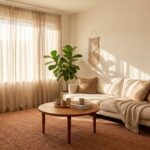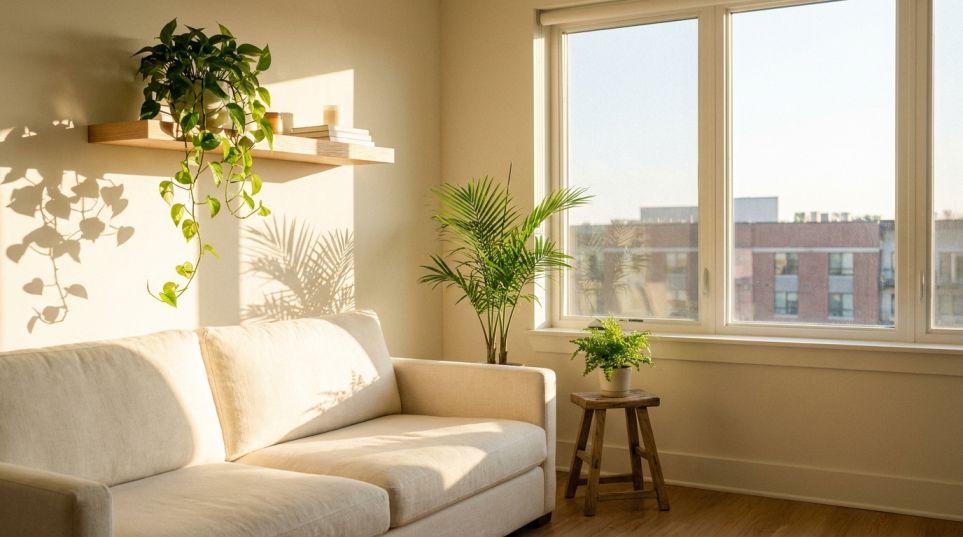
Most small space plant advice starts with “buy more plants.” I’d start with the opposite question: where can a plant go without taking anything away from you?
Decorating with indoor plants in a studio, a rental, or a compact starter home is a floor-plan problem first and a green thumb problem second. Your floor is already spoken for. Your walls, shelf tops, window edges, and corners usually aren’t.
Below are 20 ideas grouped by where they live, plus the light and pet safety checks that keep those plants alive.
First, a Quick Reality Check on “Air Purifying” Plants
You’ve probably seen the claim that houseplants clean your air. It traces back to a 1989 NASA study, and that work used sealed test chambers, where the effect was measurable. In a real home it’s a different story. A 2019 analysis modeled real world air exchange and estimated you’d need somewhere between ten and 1,000 plants per square meter to match what normal ventilation already does. The American Lung Association puts it plainly: houseplants don’t improve air quality. 7 NASA Air-Purifying Plants + Honest Research +2
So buy plants because they make a room feel good. That’s a perfectly honest reason.
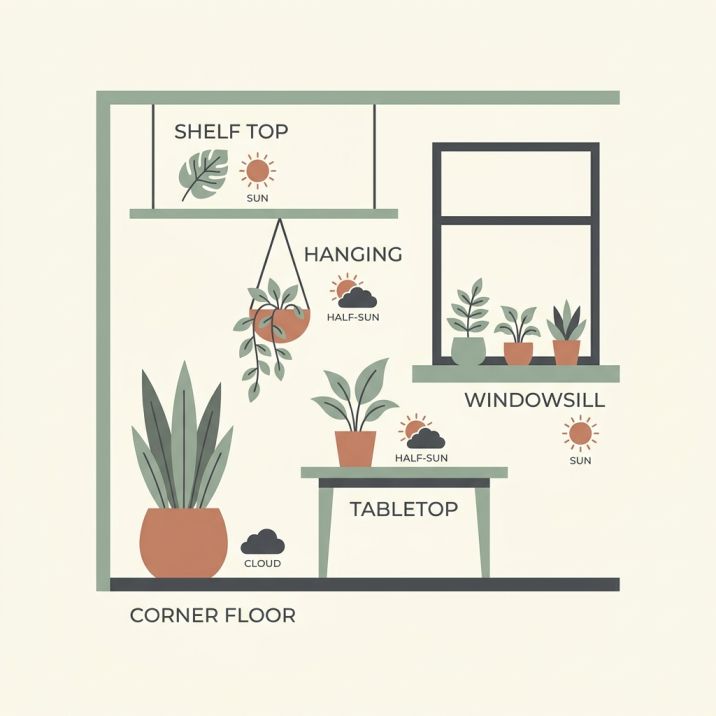
Which Placement Fits Your Space? (Quick Comparison)
| Placement | Floor space used | Light it usually gets | Best for | Watch out for |
|---|---|---|---|---|
| Shelf or bookcase top | None | Medium | Trailing plants | Drips on books, pet nibbling |
| Ceiling or wall hanging | None | Varies | Renters with tall windows | Weight limits, drip trays |
| Windowsill or window rod | None | Highest | Herbs, small succulents | Cold glass in winter |
| Tabletop or console | None | Low to medium | One statement plant | Clutter creep |
| Floor plant in a corner | A square foot or two | Low to medium | Adding height | Tripping, pet access |
Go Up: Shelves, Hooks, and Walls
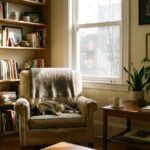
1. Let a Trailing Plant Spill From the Bookcase Top
The top shelf is dead space. A vine like pothos turns it into a soft green edge that also draws the eye upward.
2. Try a Ladder Shelf Instead of a Plant Table
A leaning ladder shelf stacks five or six small pots in the footprint of a single chair leg. Keep the heaviest pot on the bottom rung.
3. Hang One Plant From the Ceiling, Not Six
A single macrame or metal hanger near a window reads as intentional. Six read as a nursery. Use a saucer or drip tray, because water finds your rug.
4. Mount a Picture Ledge Just for Plants
A narrow ledge above a desk or sofa holds three or four small pots in a tidy line. It’s about the easiest small space plant idea for renters, since it only needs a few screw holes.
5. Run a Tension Rod Across a Window
Hang small pots from S hooks on a rod inside the window frame. You get the brightest spot in the room without giving up a single inch of sill.

Work the Surfaces You Already Have
6. Give the Entry Console One Sculptural Plant
Skip the bowl of keys clutter. One tall, architectural plant beside a mirror says “welcome” in a hallway that’s only three feet wide.
7. Style a Coffee Table Tray Around a Small Plant
Corral a mini plant, a candle, and a book on a tray. The tray makes the plant look styled instead of stranded.
8. Start a Propagation Corner on the Nightstand
A cutting rooting in a clear bud vase needs no soil, no repotting, and almost no space. It also looks good in the water glass stage, which most plants can’t claim.
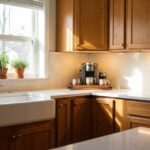
9. Keep Herbs Within Arm’s Reach in the Kitchen
Three small pots of basil, mint, or chives on the counter are decor and dinner at once. Give them the sunniest spot, not the prettiest one.
10. Put a Compact Plant on the Desk
Something small and low fuss beats a big one that blocks your monitor. If you work from a spare bedroom desk, a tiny plant at eye level breaks up screen time.
Use Corners and Floors Carefully
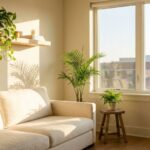
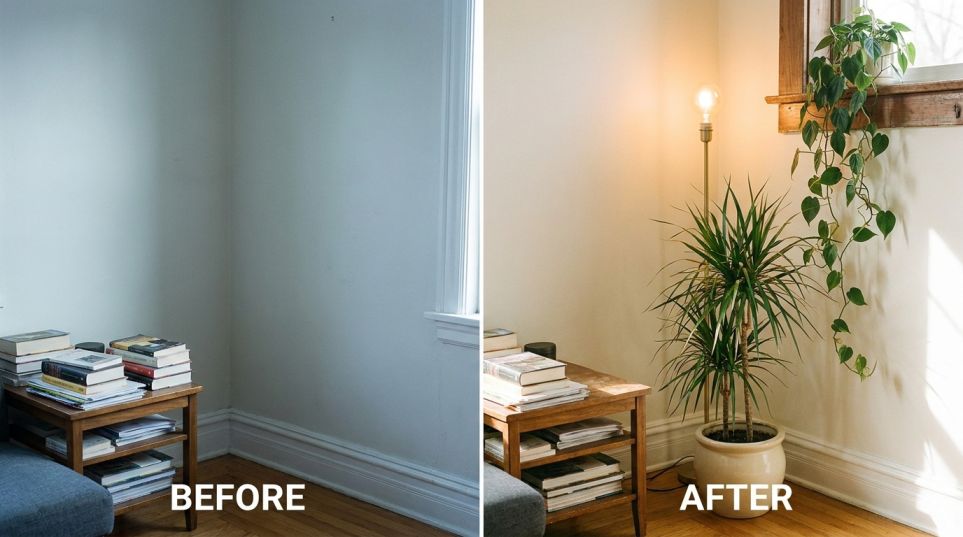
11. Fill One Empty Corner With a Tall, Slim Plant
A corner plant adds height without adding width. Think narrow, upright shapes such as a dracaena or a slim palm, not a sprawling one.
12. Group Plants in Odd Numbers on a Stand
Three pots at different heights on a tiered stand feel designed. Two matched pots side by side feel like a mistake.
13. Put a Big Plant on a Rolling Caddy
A wheeled base lets you chase the light in winter and slide the pot away for cleaning. It’s a small fix that saves your back.
14. Let a Plant Soften a Hard Edge
Tuck a mid size plant beside a TV console or radiator cover. Plants blur the sharp corners that make small rooms feel boxy.
Match the Plant to the Room
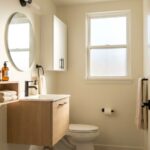
15. Bring a Fern Into the Bathroom
Steam makes bathrooms the best humidity zone in most homes. A hanging fern or a shelf plant does well there, provided the window gives some daylight.
16. Keep the Bedroom Plant Count Low
One calm, softly leafed plant is enough beside a bed. More than that starts to feel like work when you’re trying to unwind.
17. Add Height Above the Kitchen Cabinets
Trailing vines along the cabinet top make a low ceiling feel taller. Just check it’s not directly above the stove.
Style It So It Looks Chosen
18. Stick to One Pot Material Family
Terracotta, white ceramic, or woven baskets, but not all three at once. Matching materials do more for a small room than matching plants.
19. Hide the Plastic Nursery Pot
Slip it inside a decorative cachepot, and lift it out to water. It keeps drainage working and the look clean.
20. Use a Grow Light That Looks Like a Lamp
For dim apartments, a slim floor lamp with a grow bulb doubles as furniture. Per University of Missouri Extension, lights should sit about a foot above the plant and run roughly 16 hours a day.
Check Light Before You Buy Anything
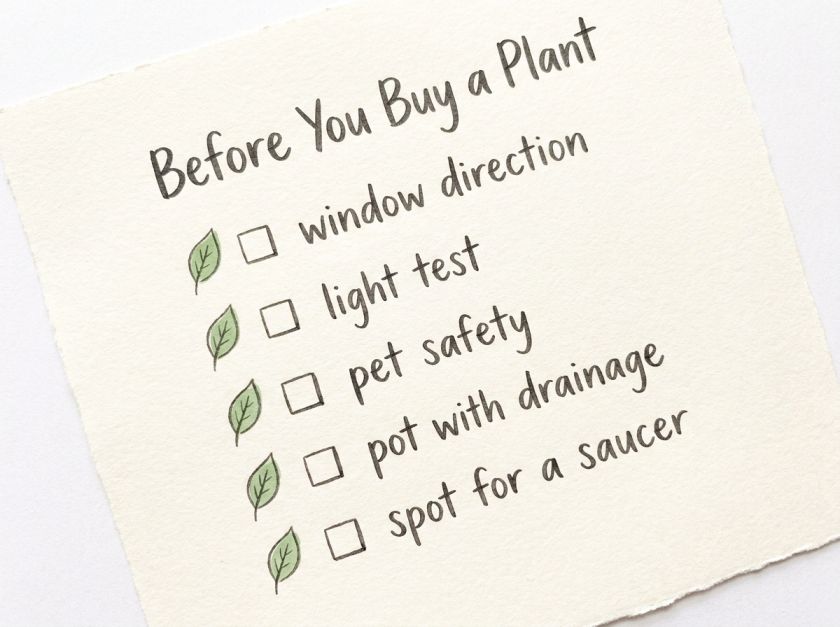
Light decides whether a plant thrives, so check it first. Oregon State Extension says south windows give the strongest sun, east and west give moderate light, and north windows give low light. Distance matters too. Light drops off fast as you move away from a window, so a plant a few feet back gets far less than one right beside it.
Simple test: if you can comfortably read a book by the window without a lamp, you’re in medium light.
Don’t Skip the Pet Safety Check
Many popular decorative plants are a problem for cats and dogs. The ASPCA notes that pothos, dumbcane, peace lily, philodendron, and Chinese evergreen all contain insoluble calcium oxalates, and that sago palms are among the most dangerous ornamental plants for both cats and dogs. Snake plant also appears on the ASPCA’s toxic list. ASPCAASPCA
If you have pets, look up each plant in the ASPCA toxic and non-toxic plant database before buying. It lists Boston fern, spider plant, African violet, and parlor palm as non toxic to dogs and cats. Hanging pots and wall shelves also help, since ceiling hooks and wall mounted planters keep plants above the reach of most pets. If you suspect a pet has eaten something, the ASPCA’s 24-hour poison hotline is (888) 426-4435.
Three Mistakes That Quietly Kill Small Space Plants
- Overwatering. Overwatering kills more plants than underwatering, so check the soil to the second knuckle before you water.
- Ignoring light. Improper light ranks close behind improper watering as a frequent cause of houseplant failure.
- Buying for looks alone. A plant that hates your window will sulk, drop leaves, and look worse than a fake one.
Key Takeaways
- Start with walls, shelves, and windows before you sacrifice floor space.
- Choose fewer, larger statements over many tiny pots.
- Plants are for looks and mood, not air cleaning.
- Check light and pet safety before you buy.
- One pot material family makes a small room feel calm.
Conclusion
Decorating with indoor plants in a small space is about restraint. Pick one spot, one plant, one pot, and add from there. If you’re planning a bigger refresh, you’ll find more small space styling guides at Vibe Nest Studio.
Which idea are you trying first? Tell us in the comments, and subscribe for more small space decorating ideas.