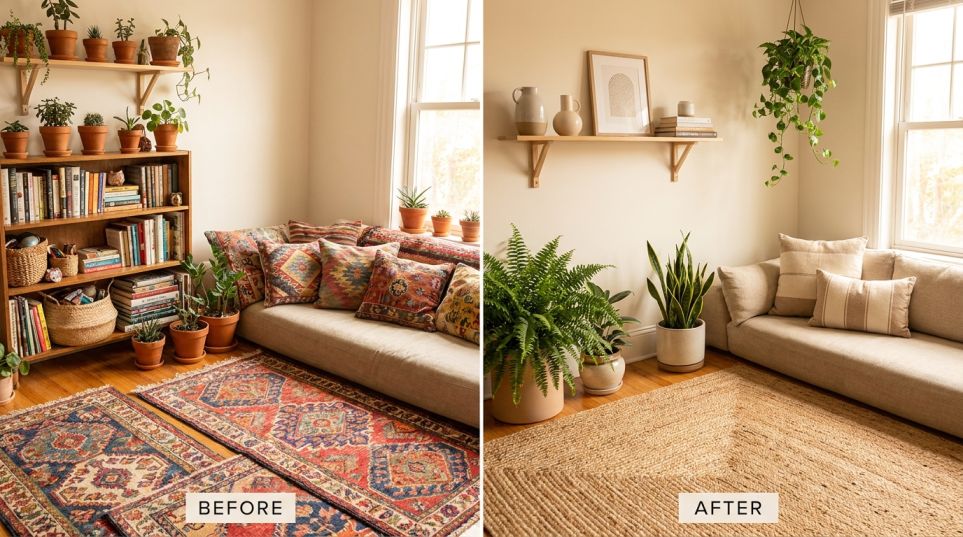
My first attempt at a boho living room looked less like a Pinterest board and more like a rug store had a small explosion in my 640 square foot apartment. Three rugs. Two macrame hangings. A jungle’s worth of plants. A coffee table so covered in “curated objects” that I genuinely couldn’t set a coffee mug down on it. It took almost a year of slowly removing things, not adding them, to figure out what actually makes small boho living room ideas work: the goal was never more. It was chosen well.
That’s the tension nobody warns you about going in. Boho style is built on layering, texture, pattern, collected objects, the sense that a room grew over time instead of being bought in one trip. In a big house, that layering has room to breathe. In a small living room, every extra object is competing for the same 200 or so square feet, and the line between “cozy and collected” and “cluttered and chaotic” gets thin fast.
Here’s the good news: small spaces and boho decor aren’t actually at odds. You just need a slightly different playbook than the sprawling, plant-filled living rooms that dominate Instagram. Below are 15 small boho living room ideas I’ve either used myself, borrowed from people who style rooms for a living, or learned by getting wrong first.

What Makes Small Boho Living Room Ideas Work (and What Doesn’t)
Most boho advice assumes you have square footage to spare. Add a rug. Add a plant. Add another textured pillow, another basket, another framed print. In a small room, that additive habit is exactly what tips a space from lived in to overwhelming.
The fix isn’t to tone down the boho style until it’s basically minimalism with a throw blanket. It’s to split your room into two jobs. The big, structural pieces (your sofa, your rug, your wall color) stay calm and neutral. That’s your foundation. Then you spend your actual “boho budget,” the pattern, the color, the personality, on the smaller, swappable layers on top of it. When people cram personality into every layer at once, loud walls, loud furniture, loud textiles, all fighting simultaneously, the room stops reading as curated and starts reading as inventory.
Keep that split in mind and the 15 ideas below will make a lot more sense as a system instead of a random shopping list.
Start With Calm Bones: The Furniture Foundation
1. Go Low and Light With Your Seating
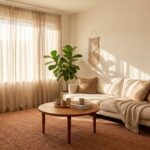
Low profile furniture does two things for a small room: it makes the ceiling feel higher, and it gives your boho textiles something quiet to sit against. A cream, oatmeal, or warm greige sofa with slim, exposed legs reads as open in a way an overstuffed, boxy one never will.
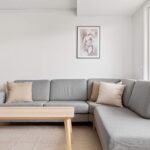
If your room genuinely has an odd corner or angled wall that could fit a sectional, a low, rounded corner couch can work as a foundation piece too, but sizing it correctly matters even more in a small space than a large one. Our guide on choosing the right corner couch for a small living room walks through the measurements and configuration questions to sort out before you fall for a fabric swatch.
2. Anchor the Room With One Correctly Sized Rug
Boho rooms love a layered rug look, and in a small space, that habit backfires fast. Three overlapping rugs in three patterns just reads as busy floor. Pick one rug, sized so at least the front legs of your seating land on it, and let it do the anchoring.
A flat weave jute or a faded vintage style kilim in a warm, muted tone is the classic boho foundation choice, and it holds up well to daily apartment traffic. If you want that collected, layered feel without the visual noise, add one small accent rug (think 2×3 feet) offset at a slight angle on top of your main rug instead of adding a second full size one. According to Ruggable’s living room rug size guide, an 8’x10′ rug generally works for a defined seating area, while a 5’x7′ is often the better call in a genuinely small room, so measure before you buy rather than guessing.
3. Let at Least One Wall Stay Quiet
It’s tempting to hang something interesting on every wall. In a small room already carrying patterned pillows and a textured rug, that’s one layer too many. Pick a single wall for your boho statement, an oversized macramé piece or a small gallery grouping, and leave at least one other wall genuinely bare or painted in a soft, warm tone. That blank wall is doing real work: it’s where the eye gets to rest.

Bring In Color and Pattern Without Overloading the Room
4. Choose Your Base Palette Before You Buy a Single Pattern
The most common mistake I see, because I made it myself, is buying one gorgeous patterned pillow first, then shopping for everything else to “go with it.” Six purchases later, you’ve got six different patterns that don’t actually relate to each other.
Pick two or three base tones first: terracotta and cream, or olive and warm brown, or rust and camel. Hold that palette against your existing furniture before you buy anything with a print on it. Everything you add afterward should pull from those same two or three colors, even if the shapes and textures vary wildly.
5. Let One Pattern Be the Loud One
Once your palette is set, choose a single dominant pattern, usually the rug or the curtains, and let it carry the visual weight. Keep pillows, throws, and smaller textiles solid or subtly textured instead of also patterned. A bold, printed rug paired with plain linen pillows reads as intentional. A bold rug paired with three more busy patterns on the sofa reads as noise.
6. Build Texture Instead of Buying More Objects
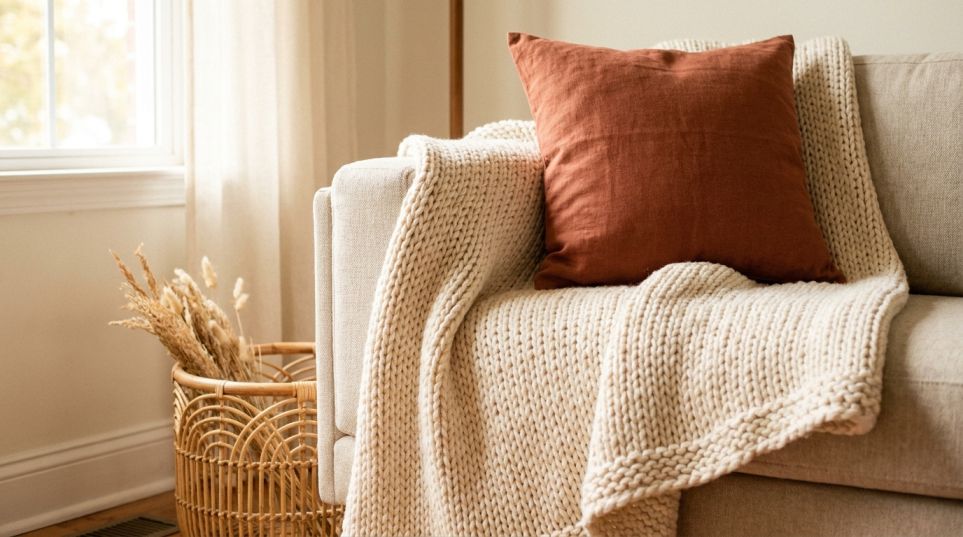
A chunky knit throw, a linen pillow cover, and a woven basket together create that layered boho feel without adding a single new “object” to the room. Texture does the visual work that a pile of extra decor usually gets blamed for doing.
Next time you’re tempted to buy something new for a shelf or the coffee table, try asking whether a texture swap on something you already own would scratch the same itch. It usually does, and it doesn’t add clutter.
Let Natural Materials Do Some of the Decorating
7. Rattan and Wicker That Pull Double Duty
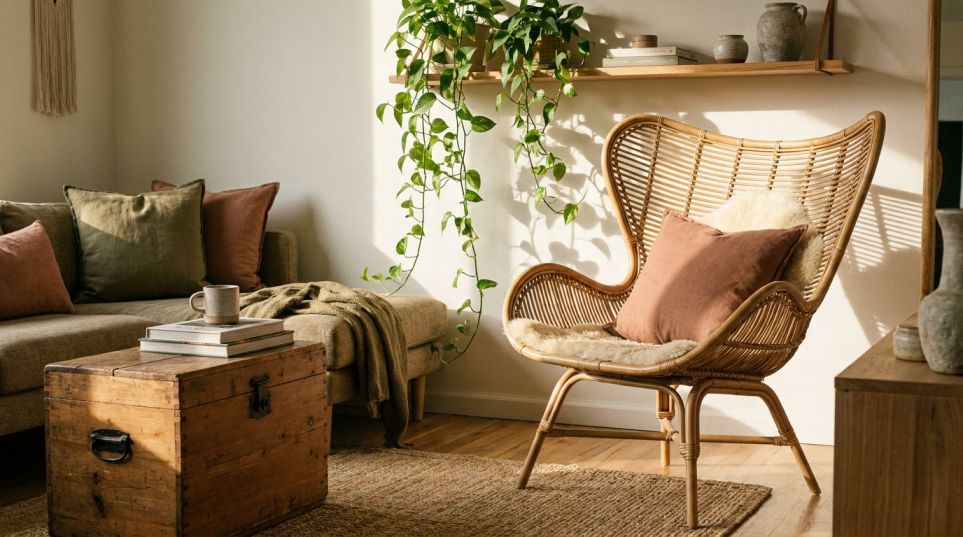
A rattan accent chair or a wicker side table brings texture into the room without needing extra decoration piled on top of it, the material itself is the decor. It’s especially useful in a small space because an open weave reads as visually lighter than solid wood, so it doesn’t add the same sense of bulk a similarly sized solid piece would.
8. Fewer, Better Plants (Skip the Jungle)
The oversized, plant filled loft look photographs beautifully and rarely translates to a genuinely small room. Two or three well placed plants, one taller floor plant tucked into a corner, one trailing pothos on a shelf, do more visual work than eight small pots scattered across every surface.
If you’re new to plant care, pothos and snake plants are the usual recommendation for beginners since they tolerate low light and irregular watering better than most.
9. Hunt Vintage Furniture for the Scale, Not Just the Look
This is the part most small space guides skip. Furniture made before the 2000s tends to run noticeably smaller than what furniture stores sell today, sofa depths, table heights, and overall footprints have all crept up over the past couple of decades to match bigger new construction homes. A slim cane chair, a narrow legged side table, or a small vintage trunk used as a coffee table will often fit a tight room’s math better than a similarly styled new piece.
That’s part of why boho, which already leans on thrifted and vintage sourcing, tends to pair more naturally with small rooms than people expect. If you’re shopping new pieces too, Apartment Therapy’s guide to buying furniture that actually fits is a genuinely useful gut check before you commit to anything.
Get the Lighting Right (Most People Don’t)
10. Swap Every Bulb to Warm White
This is the cheapest fix on this entire list and the one people skip most often. Cool white bulbs, the kind a lot of rentals ship with by default, flatten warm tones and make a boho room feel clinical instead of cozy. Lighting manufacturer Feit Electric’s color temperature guide recommends 2,700K to 3,000K “soft white” bulbs for living rooms specifically because that range produces the golden, relaxed glow most people associate with a cozy space. Swap every bulb in the room and it’ll look like a completely different place by evening.
11. Light the Room From Several Low Points
One bright overhead fixture flattens a small room and makes every shadow look harsh. Two or three lower light sources, a floor lamp with a rattan or fabric shade, a small table lamp, maybe a strand of warm string lights along a shelf, create the moody, layered glow boho rooms are known for. As a bonus, lower lighting draws the eye down and across the room instead of up, which reinforces the same “taller ceiling” trick your low furniture is already doing.
Boho Clutter vs Boho Cozy: The Quick Gut-Check
If you’re standing in your living room right now trying to decide whether something needs to go, this table is the fastest way to tell.
| Element | Reads as Clutter | Reads as Cozy |
|---|---|---|
| Rugs | Two or three overlapping patterns fighting for attention | One correctly sized rug, plus maybe one small offset accent |
| Walls | Every wall covered in art, shelves, and hangings | One statement wall; at least one wall left calm |
| Textiles | Ten mismatched pillows and three competing throws | Four to five pillows, one great throw, one shared palette |
| Plants | A dozen small pots scattered across every surface | Two or three plants, sized and placed with intention |
| Displayed objects | Every collected item and souvenir out at once | Small groupings of three, with the rest stored and rotated |
| Lighting | One harsh overhead fixture | Two to three warm, low placed light sources |
| Furniture | An oversized piece squeezed in to “make it work” | Low profile pieces properly scaled to the room |
Before you buy anything else, ask:
- Does this fit my two or three base colors, or does it start a new palette?
- Am I adding this because the room needs it, or because I liked it in the store?
- Could this be a texture swap on something I already own instead of a new item?
- If I bought this, what would I remove to make room for it?
The Personal Layer Where Small Boho Living Rooms Actually Come Alive
12. Curate Displays in Threes, Not Everything You Own
Interior stylists lean on what’s often called the rule of odds, grouping objects in threes, fives, or sevens tends to look more intentional than pairs or even numbers, because odd groupings naturally create a focal point instead of reading as a flat, matched set. In a small room, this also solves the clutter problem directly: instead of putting every travel souvenir and inherited trinket on display at once, choose three per surface and store the rest. Rotate them in every season or two so the room still feels personal without ever feeling packed.
13. Hang Textiles Instead of Buying More Furniture
Wall space is the one thing a small living room genuinely doesn’t run short on. A macrame hanging, a small woven tapestry, or a textile panel adds warmth and boho character using zero floor footprint, which makes it one of the most efficient decor moves available to a tight room.
14. Build One Great Corner, Not Five Half Finished Ones
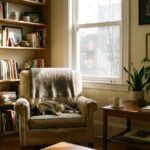
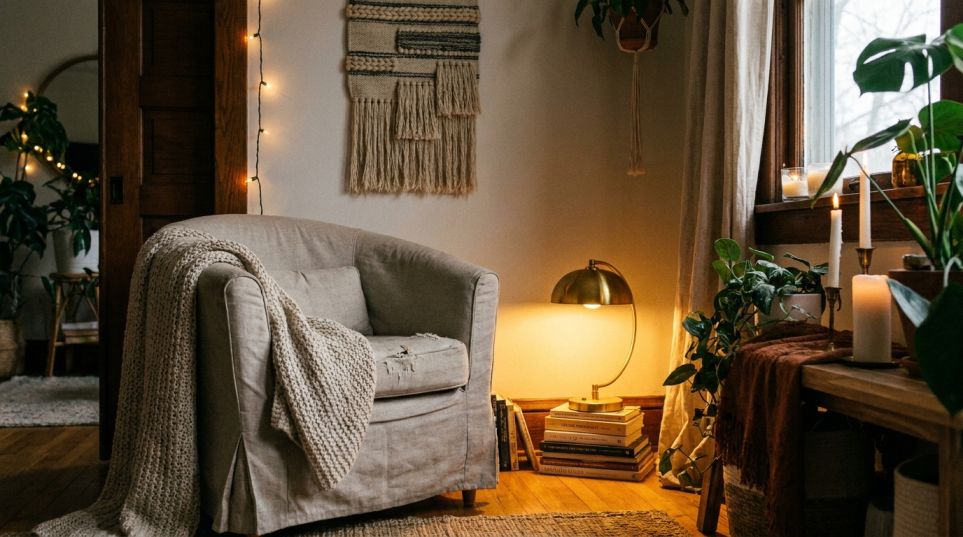
I turned the awkward dead corner by my apartment window into a reading nook: a forty dollar secondhand chair, a soft throw, and a small lamp. It’s the one spot in my apartment that people actually comment on, not because it’s expensive, but because it’s finished. Trying to make every corner of a small room “boho” spreads your decor thin and leaves everything feeling half done. Pick one corner and commit to it fully instead.
15. Mix In At Least One Old Piece
A living room furnished entirely from one store, even a boho branded one, tends to read like a staged hotel room rather than an actual home. One genuinely old piece, a thrifted trunk, a brass lamp, a hand me down side table, breaks up that matched set look immediately. It’s usually the single item guests ask about first.
Key Takeaways
- Keep the big pieces, sofa, rug, and at least one wall, calm and neutral so your “boho budget” goes toward smaller, swappable layers.
- Lock in a two or three color base palette before buying a single patterned item.
- Fewer, better plants and displayed objects beat more of everything, every time.
- Vintage and thrifted furniture often fits a small room’s proportions better than new pieces do, not just its style.
- Warm, low-placed lighting does more for “cozy” than almost any single decor purchase.
- When you’re unsure whether something belongs, edit before you add.
Make It Yours
A small boho living room isn’t a compromise version of the big, sprawling ones all over Pinterest, it just runs on a stricter editing process. Get the foundation calm, spend your personality budget on the layers that actually earn their place, and resist the urge to fill every remaining inch just because you can.
I’d genuinely love to see how this plays out in your own space. Drop a comment with your room’s biggest challenge (awkward corner, rental beige walls, a rug that’s too small), and if you’re still working out the furniture layer, our guide to choosing the right corner couch for a small living room is a solid next stop.